LifeScienceHistory.com - Check us out on Instagram
Take Your Next Career Step with Lundback
Minnesota Geography & Climate
Industry Overview |
Economy/Cost of Living
Education |
Recreation & Entertainment |
Transportation
History |
Suggested Reading List
Bordered by Canada in the north and Iowa in the south, while dissected vertically by the Mississippi River, Minnesota is a central northern state with distinct seasons and varied topography.
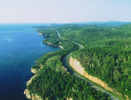 Due to its northern location, Minnesota’s climate is cooler than most other continental states. Minnesota, however, does enjoy four distinct seasons including warm summers and cold, snowy winters. Central Minnesota temperatures in July average from 60 to 85 degrees F (16-29 C), while January temperatures typically range from 5 to 20 degrees F (-15--7 C). Average annual precipitation ranges from 18 inches (46 cm) in the northwest to over 30 inches (76 cm) in the southeast. Approximately 65% of this precipitation falls in the form of rain between May and September. Average annual snowfall ranges from 70 inches (178 cm) along Lake Superior to 36 inches (91 cm) in the southwest.
With almost 87,000 sq. miles (225,330 sq. km), Minnesota is the 12th largest state in the U.S. Minnesota is comprised primarily of rolling plains, which provide excellent fertile topsoil. The northern area of the state is rockier, while the southern area is flat, encompassing rivers and streams. Known as the “Land of 10,000 Lakes”, Minnesota is actually home to over 15,000 lakes and five major rivers, with 7,326 sq. miles (18,974 sq. km) covered by water. Minnesota sits at a mean of 1,200 feet (366 m) above sea level; the elevation ranges from 602 feet (183 m) above sea level at Lake Superior to 2,301 feet (701 m) above sea level at the summit of Eagle Mountain.
Based on 2000 Census data, Minnesota ranks 21st in population, with 4,919,479 residents. Minnesota’s largest cities are Minneapolis, with 382,618 residents and its capital, St. Paul, with 287,151 residents.
Related Resources
Return to Destination Minnesota